

Dhampur Speaks · Ingredient stories
From cane fields
to your kitchen.
Meet Desi Khand: traditional cane sweetness with a little character. Discover its flavour, find your favourite way to use it, and know what to look for on the label.
Find your everyday use
01 / A familiar ingredient
What is Desi Khand?
A cup of evening chai. Kheer simmering on the stove. Halwa made for a family occasion. Some flavours feel instantly at home in an Indian kitchen, and Desi Khand belongs in that company.
For generations, sugarcane has given Indian kitchens a range of sweeteners. Desi Khand, often associated with Khandsari sugar, is one of them. It is a crystallised cane sugar, generally made with less intensive refining than conventional white table sugar.
Its colour, crystal size and flavour depend on the variety and how it is processed. You may find creamy, off-white, golden or brownish crystals with a mild earthy or caramel-like note. It is easy to use in everyday food, from milk coffee to homemade mithai.
The quick answer
Desi Khand is traditional cane sugar with a distinctive flavour and variable crystal texture. It is different from jaggery and is not automatically the same as commercial brown sugar. It remains a sugar-containing sweetener.
02 / From juice to crystals
How is Desi Khand made?
The exact method differs between producers, but the broad journey starts with sugarcane juice and ends with dried sugar crystals.
-
Extract the juice
Sugarcane is crushed to release the juice that will be processed into sugar.
-
Clarify and concentrate
The juice is clarified and heated. As water evaporates, it becomes a concentrated syrup.
-
Form and separate crystals
Sugar crystallises from the concentrated syrup. The crystals are separated and processed for the intended variety of Khand.
-
Dry and pack
The crystals are dried and packed. The finished colour and texture reflect the particular process used.
Why isn’t it always white?
Different levels of refining and residual cane components can give Khand its creamy, golden or brownish appearance. A darker colour alone does not prove quality, authenticity or a particular nutritional benefit.
What does it taste like?
Alongside sweetness, some varieties bring a gentle earthy or caramel-like note. Try it in masala chai: ginger, cardamom and milk make a familiar setting in which to notice the difference.
03 / Know the difference
Desi Khand vs white sugar vs jaggery
These ingredients can all add sweetness, but their processing, flavour and behaviour in a recipe differ. Choose with the dish in mind.
| Feature | Desi Khand | White sugar | Cane jaggery |
|---|---|---|---|
| Processing | Crystallised cane sugar, generally less intensively refined | Refined sugar, usually from cane or beet | Concentrated cane juice without separating sugar crystals in the same way |
| Appearance | Off-white, golden or brownish; variable crystals | White, relatively uniform crystals | Brown or golden; blocks, cubes or powder |
| Flavour | Often mild, earthy or caramel-like | Neutral sweetness | Usually a stronger cane or molasses-like flavour |
| In the kitchen | Chai, coffee, mithai and recipe experiments | General sweetening and many standard baking recipes | Recipes where its stronger flavour is welcome |
| What they share | A sugar-containing sweetener | A sugar-containing sweetener | A sugar-containing sweetener |
Is Desi Khand the same as brown sugar?
Not necessarily. Commercial brown sugar contains molasses along with sugar crystals, while Desi Khand is associated with traditional Khandsari-style processing. Similar colour does not mean identical moisture, flavour or crystal structure. Read the label rather than relying on appearance.
Can it replace white sugar?
In many drinks and everyday dishes, yes: try it in your usual recipe and adjust to taste. Baking needs more care. Sugar influences moisture, browning, spread and structure, so there is no universal substitution rule that guarantees the same result in every cake or cookie. Test a small batch first.
Traditional sweetness, clear expectations
People choose Khand for its flavour, culinary heritage and processing preferences. Those qualities do not make it sugar-free or establish a special health benefit.
For people managing diabetes: Khand is still sugar and can affect blood glucose. Follow an individual meal plan from your doctor or qualified dietitian instead of assuming that “natural” or “less refined” means unrestricted. Read NIDDK’s diabetes guidance.
04 / Make it your own
What are you making today?
You do not need to change your cooking routine to try Desi Khand. Begin with a familiar dish and notice how the flavour works with ingredients you already enjoy.
8 kitchen ideas
Masala chai
Prepare chai as usual, stir in Khand to taste, and let it dissolve. This is a simple way to get to know its warm flavour.
Try with ginger, cardamom or cinnamon.
Milk coffee
Stir into hot coffee until dissolved. A mild caramel-like note can sit comfortably alongside milk and roasted coffee flavours.
Start with your usual coffee preparation.
Warm spiced milk
Stir Khand into warm milk and add your preferred spices. Its subtle flavour leaves room for fragrant additions.
Try with saffron, cardamom or chopped almonds.
Kheer
Use as the sweetener in your rice kheer recipe. Milk, rice, cardamom and nuts provide a familiar base for its gentle cane flavour.
The finished colour may vary with the Khand.
Halwa
Try it in atta or suji halwa, following the method in your recipe. Its warm flavour complements roasted flour and ghee.
Dissolve as your recipe requires.
Laddoos and mithai
Experiment with recipes featuring besan, atta, sesame or coconut. Match the crystal size to the texture you want in the finished sweet.
Coarse crystals can change the mouthfeel.
Cookies and tea cakes
Try a small batch before adapting a whole recipe. Crystal size and moisture can change mixing, browning and the final texture.
Use recipe weights and record your adjustments.
Lassi, nimbu pani and sherbet
Dissolve Khand separately in a little water if needed, then mix it into the drink so the crystals do not settle at the bottom.
Also worth trying in homemade iced tea.
These are cooking ideas, rather than tested recipes. Use your recipe’s method and adjust for the variety of Khand you have.
05 / Read the label
How to buy Desi Khand online
A useful product page should make it clear what you are buying. Look beyond colour and packaging, compare the net quantity, and distinguish between terms such as “organic”, “sulphurless” and “Khandsari”. They describe different things.
Your buying checklist
Tick each point as you check a product listing or pack.
0 of 5 checked
A pouch can be practical for regular use, while a jar may be convenient for storage. Cafés, offices and hospitality buyers may prefer portion packs where available. Compare each format on its own merits.
06 / Explore the range
Choose the right Desi Khand for your kitchen
Explore each variety and check the product page for current pack details, price and availability.
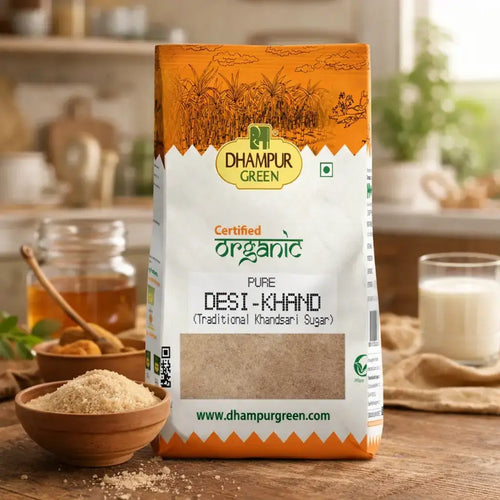
Organic option · 800 g
Organic Pure Desi Khand
A traditional Khandsari-style choice for households looking for an organic option.
- Certified organic option
- Mild, rounded cane sweetness
- Ideal for chai, mithai and baking
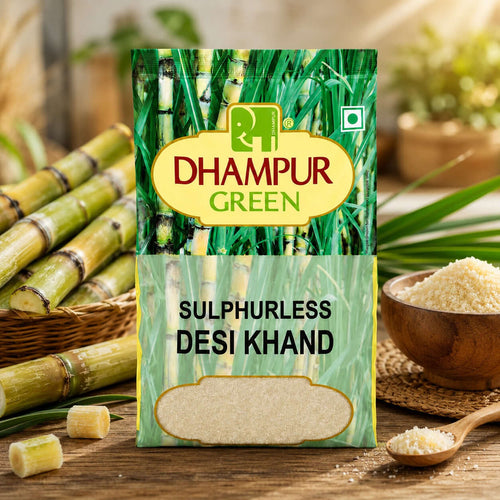
Sulphurless option · 1 kg
Sulphurless Desi Khand
A versatile everyday option for tea, coffee, Indian desserts and regular cooking.
- Sulphurless variety
- Made for everyday use
- Suitable for hot and cold drinks
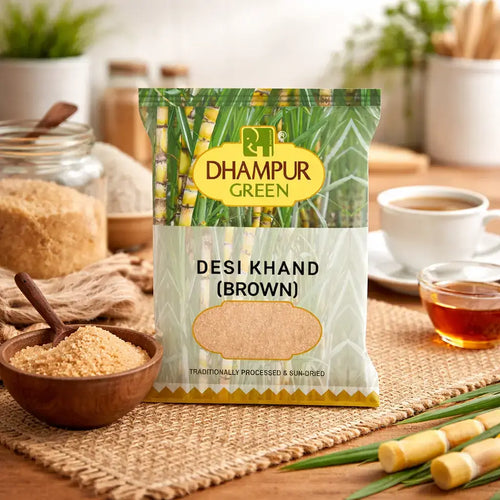
Brown variety · 1 kg
Brown Desi Khand
A deeper-coloured variety with a warm, traditional cane-sugar character.
- Warm brown cane-sugar profile
- Great for chai, halwa and kheer
- Convenient 1 kg pack
For the current price, pack size and stock status, open the product page.
How should you store Desi Khand?
Follow the storage instructions on the pack. Keeping moisture out helps preserve its texture.
- Reseal the pack or use a clean, airtight container.
- Keep it in a cool, dry place, away from damp surfaces.
- Use a dry spoon and close the container after each use.
Moisture can make crystals sticky or cause clumps. Check the pack’s date and condition as well as its appearance.
07 / A few good questions
Desi Khand FAQs
Tap a question to open the answer.
What is Desi Khand in simple words?
It is a traditional crystallised cane sugar, commonly associated with Khandsari. Its colour and texture vary, and it can have a mild earthy or caramel-like flavour.
Is Desi Khand the same as ordinary sugar?
It is a type of sugar. Compared with highly refined white table sugar, it can differ in processing, colour, crystal size and flavour. Both provide sweetness.
Is Desi Khand the same as jaggery?
No. Khand is crystallised sugar. Cane jaggery is concentrated cane juice made without separating sugar crystals in the same way, and is commonly sold in blocks, cubes or powder.
Does a darker colour mean better Khand?
No. Colour reflects the product and its processing. Check ingredients, processing information, certification where relevant, and the condition of the pack instead of judging quality by colour alone.
Can I use Desi Khand in tea or coffee?
Yes. Stir it into hot tea or coffee until dissolved and adjust to taste. Chai is a convenient first way to try its flavour.
Can it be used in baking and Indian sweets?
Yes, depending on the recipe. Try it in kheer, halwa and suitable mithai recipes. For baking, test a small batch because crystal size and moisture can affect texture and browning.
Is Desi Khand healthier than white sugar?
Less refining does not by itself establish a health advantage. Choose it for the flavour and processing qualities you prefer, while remembering that it remains sugar.
Can people with diabetes use Desi Khand?
It should be treated as a sugar-containing sweetener that can affect blood glucose. A doctor or qualified dietitian can advise how it fits an individual meal plan. It is not a diabetes treatment or a sugar-free substitute.
How much does 1 kg of Desi Khand cost?
The price depends on the variety, pack and current offers. Check Sulphurless Desi Khand or Brown Desi Khand for current product pricing.
Where can I buy Dhampur Green Desi Khand?
Browse the Dhampur Green products in this guide, then open the relevant product page to review its details and available options.
Why has my Khand formed lumps?
Moisture can cause sugar crystals to stick together. Follow the storage guidance on the pack, keep the container sealed and use a dry spoon.
Start with your next cup of chai.
Some ingredients earn their place through everyday use. Try Desi Khand in a familiar recipe, enjoy its character, and discover where it belongs in your kitchen.
Explore Desi Khand